Natural vs Synthetic Raffia: 5 Ways to Tell
Short answer: natural raffia comes from the leaf fibres of the raffia palm and shows it — uneven width, a matte surface and slight colour variation. Cellulose-based or synthetic raffia is more uniform, more evenly coloured and usually a touch shinier. Both can make a great bag; yarn quality and workmanship matter more than the label.
Today “raffia” names a family of yarns rather than a single material. Alongside natural palm raffia, you'll find cellulose-based versions (viscose or paper) and fully synthetic ones sold under the same name. At EXTACO we work with Koreka, Milano, Turkish and Nas raffia, each with its own thickness, sheen and hand. These five checks will help you work out what a bag is really made of.
| Trait | Natural raffia | Cellulose / synthetic raffia |
|---|---|---|
| Width | Irregular, varies strand to strand | Even and consistent |
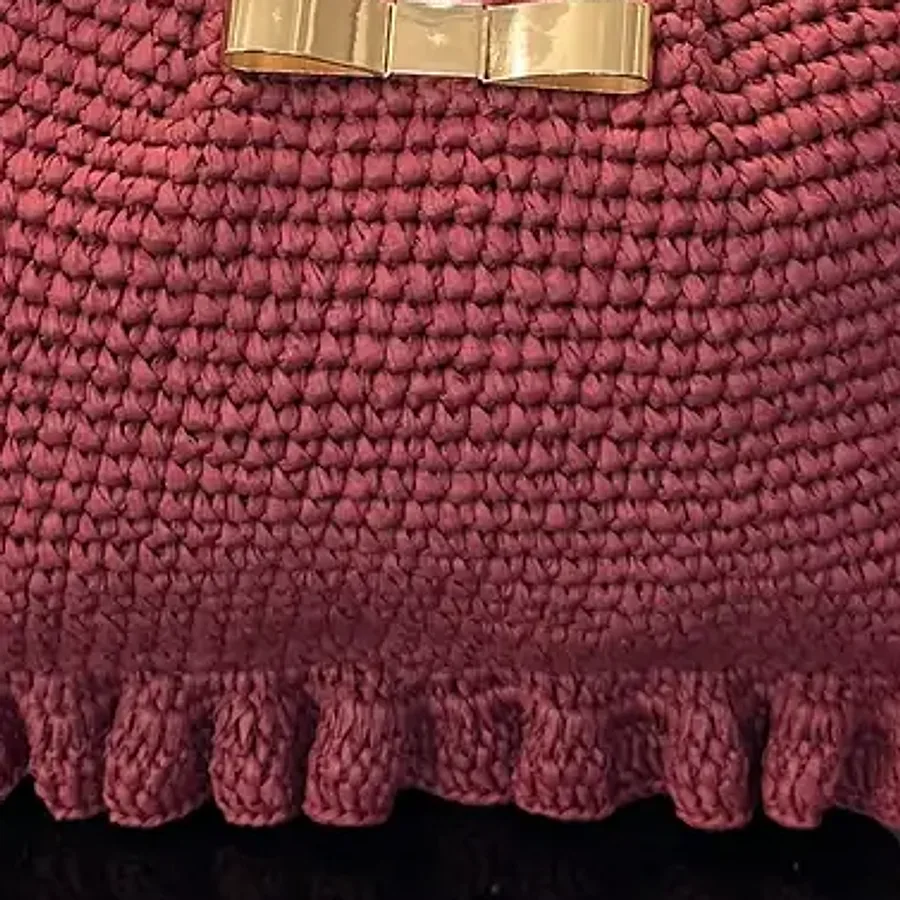
| Surface | Matte, slightly fibrous | Smoother, often with a soft sheen |
| Colour | Natural shifts between tones | Uniform; wider range of bright shades |
| Water | Softens when wet, recovers as it dries | Depends on the yarn; paper-based types dislike moisture |
| Smell and feel | Faint grassy smell, dry hand | Neutral smell, slicker hand |
1. Check the width of the strand
Because natural raffia is split from a leaf, no two strands are quite the same width — one stitch may be narrow, the next broader. Machine-made yarns are identical from start to finish, so the crochet looks more regular.
2. Hold it up to the light
Natural raffia is matte, and up close you'll see fine fibres. Most cellulose and synthetic yarns catch the light a little. Shine alone isn't a quality signal, though — on some designs it's exactly the point.
3. Look at the colour
Natural raffia shows small tonal shifts even within one bag; that's part of its character. Very saturated, perfectly even colour usually points to a dyed cellulose or synthetic yarn.
4. Think about water
Natural raffia softens when it gets wet and, dried properly, recovers its shape. Cellulose-based yarns — paper-based ones especially — are more sensitive to moisture. Whatever the type, never soak a raffia bag.
5. Feel it
Natural raffia feels dry, slightly stiff and plant-like; it can be a little firm at first and softens with use. Synthetic alternatives feel slicker and more pliable from day one.
So which is better?
Neither, universally. Natural raffia gives texture and character; cellulose-based raffia wins on colour consistency and crisp shape. What really decides how long a bag lasts is the quality of the yarn and how tightly it's worked. If you want to know exactly which yarn a piece uses, just ask us.
See bags crocheted in different raffias in our raffia bag collection, and keep yours looking right with our care guide.